
Red Hot Chili Peppers Ready for a Big Return — 2026 World Tour & Final Chapter
For more than four decades, the Red Hot Chili Peppers have been one of the defining forces in American rock music — a band synonymous with funk-driven basslines, sun-baked California attitude, and a career marked by reinvention, resilience, and unmistakable chemistry. As the possibility of a major 2026 world tour circulates among fans and music commentators, conversations have grown about what such a tour might represent: not merely another global run, but the potential final chapter in an era-spanning journey. Whether framed as a farewell, a celebration, or a culmination, a 2026 RHCP world tour carries significance beyond a series of concerts. It symbolizes a moment of reflection, transition, and closure for both the band and the millions who have grown up with their music.
Red Hot Chili Peppers’ story is as much about transformation as it is about sound. From their early days blending punk energy with funk rhythms to the later melodic, introspective phases that defined some of their biggest records, RHCP have always been shaped by change — lineup shifts, stylistic pivots, and personal reinventions. Their longevity rests not on repeating a formula but on constantly challenging the boundaries of what their music can be.
A major world tour in 2026 would, in many ways, capture the essence of that evolution. It would likely span songs from every chapter of their catalogue — the raw, frenetic early years; the emotionally rich 1990s era; the stadium-shaking 2000s; and the more reflective, exploratory works of recent decades. For fans, this means the chance to witness the full arc of the band’s identity in a single sweeping celebration.
The idea of a “final chapter” in RHCP’s touring life evokes both excitement and a bittersweet atmosphere. Long-running bands eventually face the reality of time: aging bodies, changing priorities, and the desire to look back with intention rather than simply continue out of habit. A farewell tour — if that is how the band chooses to frame it — would allow them to conclude their journey not with gradual fading but with a deliberate, meaningful tribute to the legacy they’ve built.
For the band members, a final world tour would also be a chance to reconnect with global audiences on a scale that feels purposeful. It could serve as a bridge between their original sense of youthful rebellion and the reflective wisdom that comes with decades of creating, performing, and surviving together. Such a tour would not signal an erasure of the band’s identity but rather an honoring of it — a moment to celebrate what they have achieved while acknowledging that every story benefits from a fitting conclusion.
When discussing RHCP’s enduring influence, the role of the classic lineup — particularly the artistic bond between Anthony Kiedis, Flea, Chad Smith, and John Frusciante — looms large. Their shared dynamic has been central to some of the band’s most iconic eras. A 2026 tour framed as a grand return would inevitably emphasize this chemistry, presenting fans with a rare, powerful reminder of what makes RHCP unique.
The synergy between Kiedis’ vocal style, Flea’s masterful bass grooves, Frusciante’s emotional guitar work, and Smith’s precise rhythmic backbone is something audiences rarely experience across multiple decades. A world tour centered around this combination would serve as a living anthology of the band’s defining moments — a reminder of the creative forces that shaped modern alternative rock.
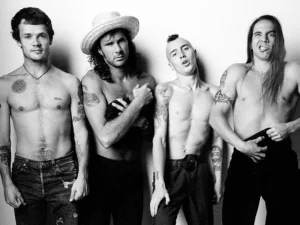
If RHCP were to embark on an expansive world tour, the global scale itself would reflect the band’s international impact. Their music has traveled far beyond California’s borders; it has become an essential part of the global soundtrack of multiple generations. Concerts in North America, Europe, South America, Asia, and Oceania would not simply be performances — they would be reunions, cultural gatherings, and collective acknowledgments of the group’s place in musical history.
A farewell tour would almost certainly bring out multigenerational audiences: longtime fans who grew up with Blood Sugar Sex Magik, younger listeners who discovered the band through streaming platforms, and even families attending together as a shared musical experience. Few rock bands maintain that level of cross-generational resonance.
A final global run carries emotional undertones not just for artists but for the audience. Fans develop personal narratives tied to the music — memories of adolescence, relationships, road trips, heartbreaks, and triumphs soundtracked by the Peppers’ catalogue. The band’s songs are woven into the lives of millions, and seeing those songs performed live one more time is often deeply meaningful.
For the band, the emotions are equally potent. Musicians who spend decades together develop a bond that is both artistic and familial. Taking the stage in front of massive crowds becomes a ritual — a shared expression of vulnerability, joy, and connection. If 2026 marks their final major tour, the emotional gravity of each performance would be unmistakable.
A culminating tour also provides an opportunity to shape how the band’s legacy is remembered. Rather than fading into sporadic performances or indefinite hiatus, a structured farewell allows the narrative to be intentional. It offers room for retrospective storytelling — through stage design, setlists, visual production, and the acknowledgment of each era of their work.
It also aligns with a broader cultural trend of legendary bands curating how their histories are preserved. As the music industry shifts toward catalogs, archives, and long-term preservation strategies, a final tour becomes a symbolic capstone in that process.
A farewell tour would not necessarily mean the end of creativity for RHCP’s members. Historically, artists transitioning away from intensive touring often explore other avenues: solo projects, production work, charitable initiatives, or more selective, low-pressure creative collaborations. For a group as versatile as RHCP, the possibilities remain wide open.
However, the symbolic end of large-scale touring would allow them to close the chapter of constant global travel — a demanding lifestyle even for younger artists — and transition into a new phase defined more on their own terms.
Ultimately, a 2026 RHCP world tour presented as a “final chapter” would not be a mourning of what is ending but a celebration of what has been. It would highlight a band that shaped the sound of multiple generations, survived challenges, reinvented itself more than once, and continued to bring audiences together around music that radiates emotion, groove, and honesty.
Whether or not this tour becomes their last, the anticipation surrounding such a possibility speaks to the profound impact the Red Hot Chili Peppers have had — and continue to have — on the world of music. For countless fans, a 2026 tour would not simply be a concert series. It would be a moment in cultural history.